
Due to confidentiality agreements, I cannot share specific details of my work at KPMG. However, I can provide a high-level overview of my role, the process, and the takeaways I learned during the project.
Project Summary
Product
A desktop application for a Generative AI Tool
My Role
UX Researcher & Designer
Project Duration
2022 – today (ongoing)
My Time in the Project
October 2024 – March 2025
Tools
Figma
My Role & Responsibilities
I worked closely with the principle UX designer of the project. In the 6 months, I carried out UX Research for several different features. In the time of absence of the principle UX Designer, I partly took over her role, where eventually, one of my designs got implemented by the developers.
My Contributions
- Initation of user interviews in order to gain insights into how our users integrate the AI tool into their work flows
- Integration of User Experience Design Frameworks such as Empathy Maps, Assumption Mapping, User Flow Mapping, Competitor Analysis, Requirements Analysis, Crazy 8’s Ideation, Paper Wireframing and Low-Fidelity Prototyping
- Design of close-to-reality high fidelity mockups
- Organization of the Figma design file for a better collaboration between designers and easier hand-off to the developers
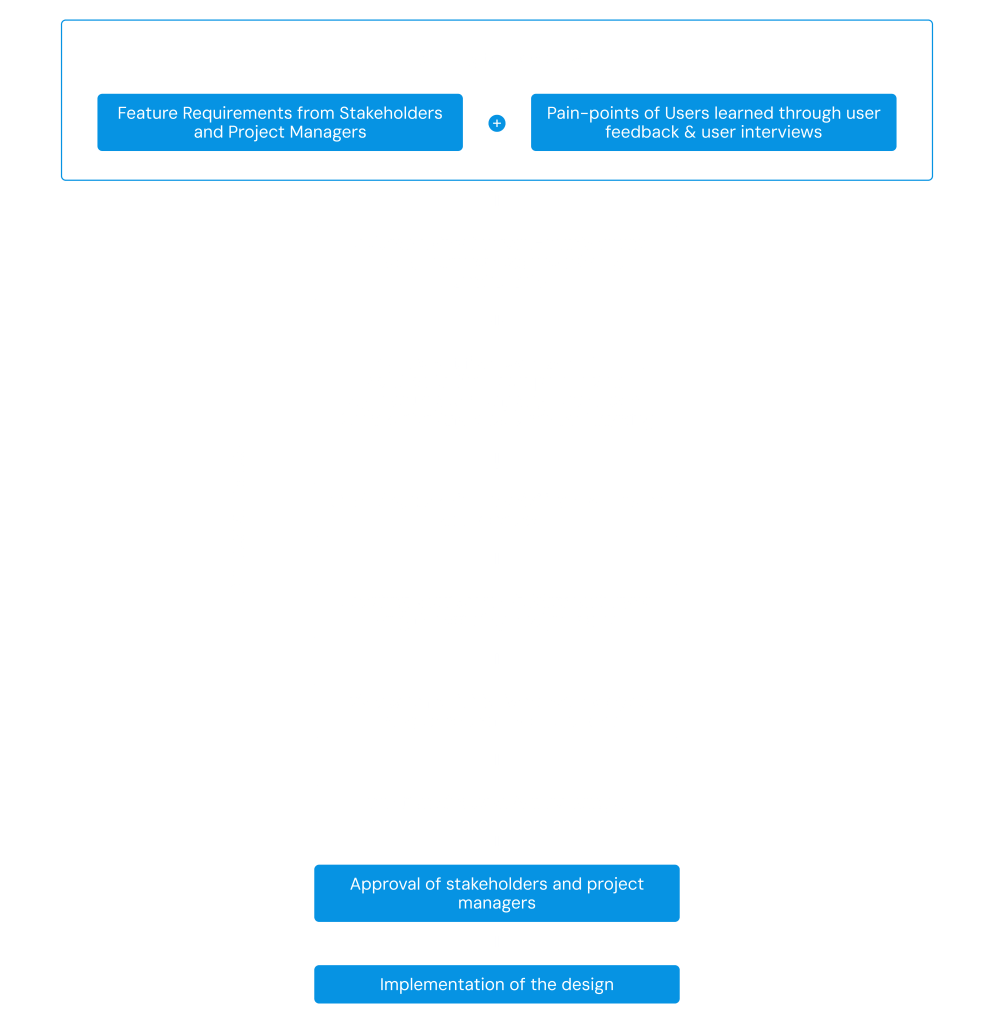
Design Process
Takeaways
- The role of the designer: The designer is the one responsible for considering the implications of the upcoming features for the user. Stakeholders & the product team might have a different perspective on what the product should look like. For many, it is easy to lose perspective on the value of the feature for the user. This is why it is crucial for the User Experience Designer to push for a user-centric approach and fights for the user.
- See the vision, design the today: New feature development or improvment of existing features require the designer to not only consider how the user will use the product today, but what the product could look like in the future. The designer should aim for a smooth transition between old and new designs, ideally reducing the major changes where users are requested to learn the functinoalities new to a minimum. In order to do that, the designer has to be informed of the big picture, know about the vision for the product and plan space for it in the current designs.
- User Interviews have many benefits: A lot of the time, product teams work based on assumptions. User Interviews can help not only in deciding which features should be implemented or as usability studies, but also to give the UX Designer an intuition behind how the users acutally integrate the application into their day-to-day. The more interviews, the better.
 Lara Aldulaijan Portfolio